
Needles
Thank you to Carsten Fischer for this in-depth look at needles and their characteristics.



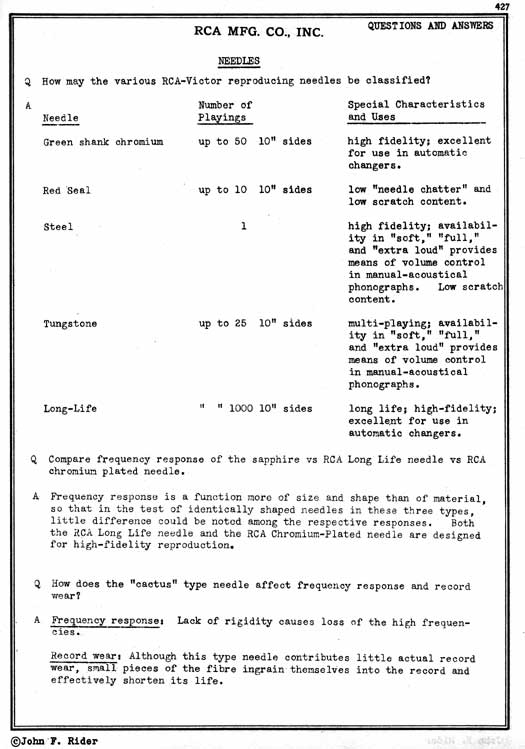
For your reference you should look in
the 1941 Riders Manual of Recorders and Automatic Changers. In the RCA
section, there is a whole page about what
needles to use.
Now, for the early 16-E changers the company
recommended Full-Tone Tungstones.
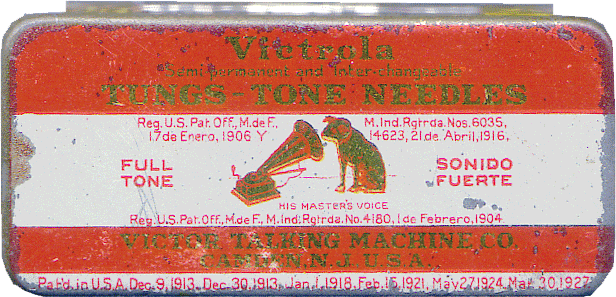
These were replaced in the mid-thirties
by chromium, and towards
the end of
the thirties by osmium tipped jukebox needles. Jewel tipped needles are
mostly a post-war development.
Now the practical aspect: Tungstone is definitely the gentlest way of playing,
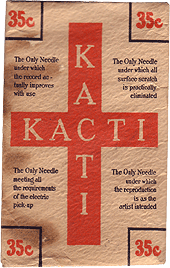
also cactus needles may work with a well-rebuilt pick-up. And I heard of
one collector who prefers cactus.
For the Feather Touch crystal pick-up, osmium can be recommended because
of the low weight. With the magnetic pick-up, osmium is going to cause
some wear, but it may still work.
For osmium needles, bent shank needles should be give preference to
straight shank. I know collectors who really like osmium needles with
a half-round
nylon shank, because it reduces scratch.
Below are discussed some main types of osmium multi-play needles with an evaluation of their sonic and wear qualities. These osmium needles were produced by many manufacturers (other than the ones shown) for use in commercial jukeboxes and home changers
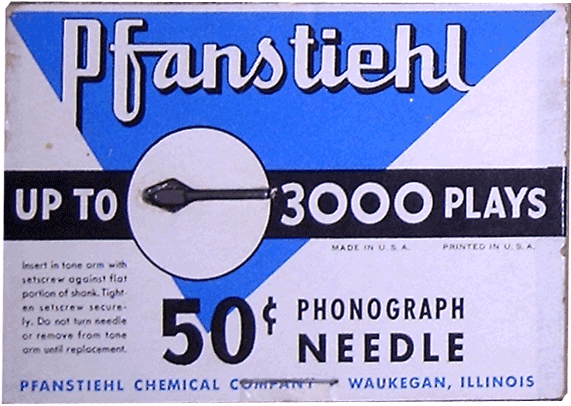
Pfanstiehl - a straight shank needle, probably the loudest, but concern of record wear.
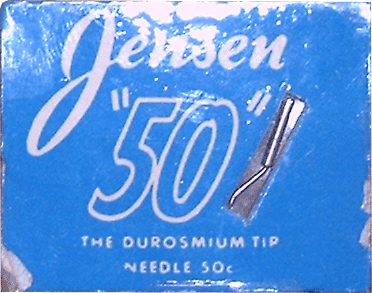
Jensen - a thin, not tapering bent shank needle: effectively filters
scratch and gentle on records, but in my experience produces unpleasant
resonance
and some loss in volume.
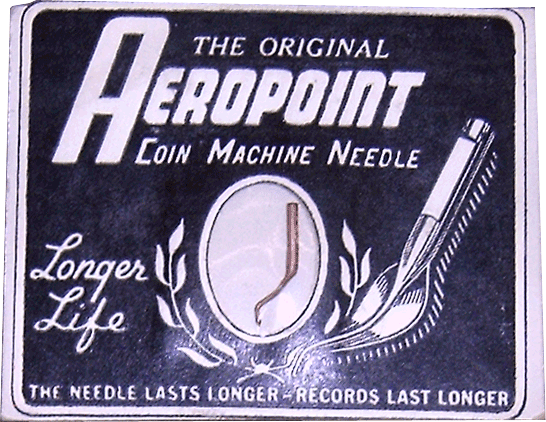
Aeropoint - a tapering bent shank needle: Sounds best in my experience,
good treble without resonance.
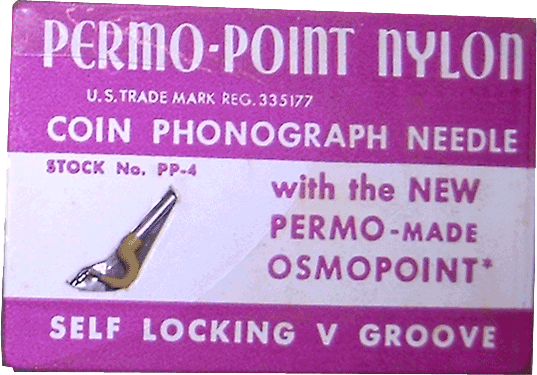
Permo Point Nylon: Some collectors swear by this needle: Very effective
scratch removal, nice tone, perhaps a little loss of treble. Since this
one is a
little longer, a re-adjustment of pick-up elevation may be required.
And again, all jewel tips are strongly advised against. Osmium tips
must never be taken out of the pick-up and re-inserted later, because
the
tip is shaped by the groove, and would damage if inserted in a different
position.
Chromium should be avoided at any cost, because it just causes awful
record wear.
Jewel tip is totally unsuitable, because the jewel rips the record apart,
and may even shatter under the weight.
====
For the post war 41-E, the original cartridge was a special General
Electric Variable Reluctance cartridge with a special double shell and
longer body.
The sapphire tip stylus is soldered in and was only factory replaceable.
The 33 rpm cartridge was a General Electric VR RPX cartridge with push
out stylus (customer replaceable).
It may be advisable to upgrade the GE VR to a GE VR RPX cartridge for the
78 rpm side to solve the needle replacement problem. Also, the hum shielding
is better.
Replacement RPX styli are available from needle dealers, but the 78 rpm
needles are almost exclusively sapphire or ruby, which is ok for the 78
rpm geometry.
Microgroove needles should always be diamond, because sapphire and ruby
wear too quickly and are reputed to leave deposits in vinyl records.